


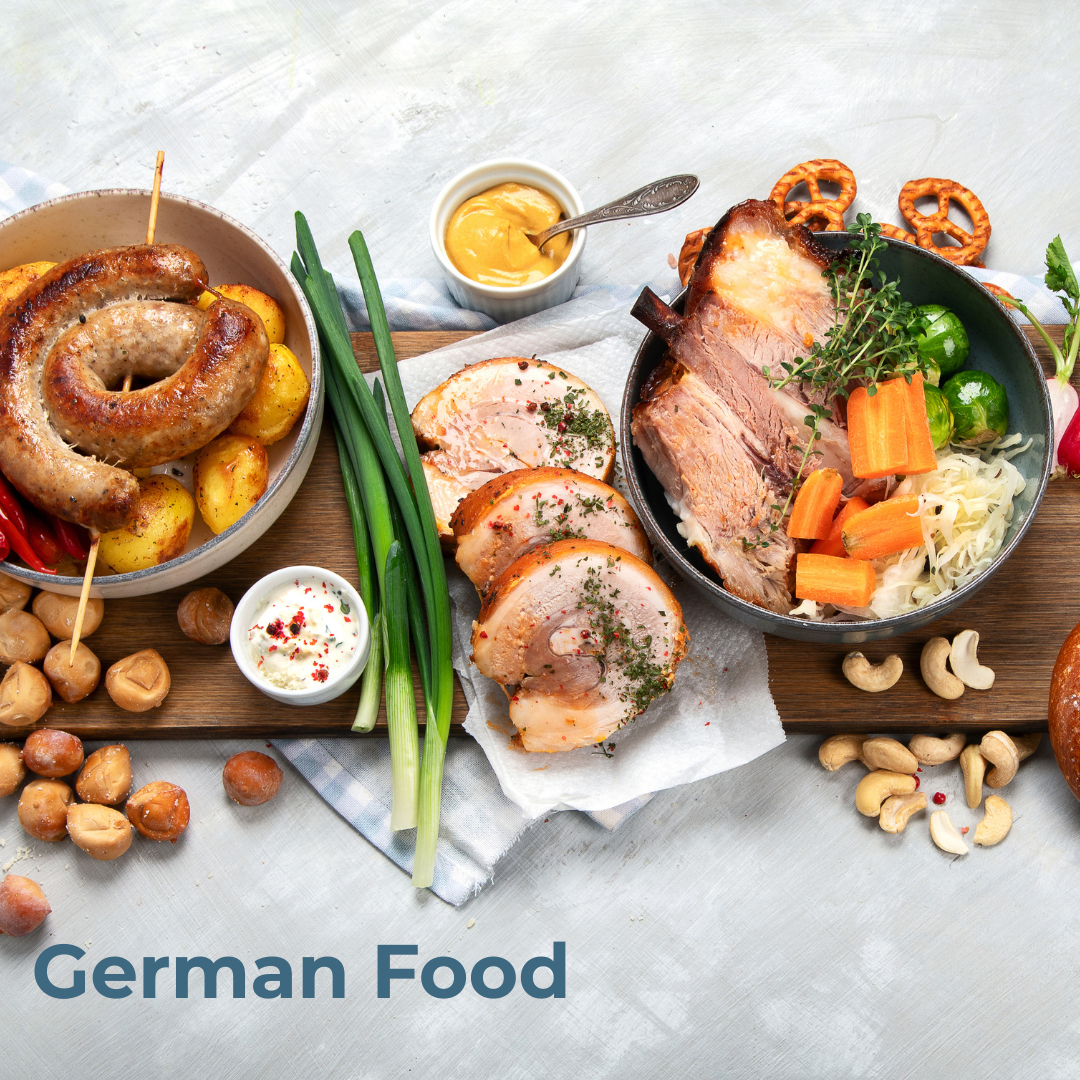
10 Traditional German Dishes – A Culinary Introduction to German Culture
Germany is not only known for its cars, castles, and beer, but also for its cuisine, which has a lot to offer! If you are not yet familiar with Germany’s culinary highlights, then you should definitely try these 10 dishes. They show how diverse and delicious German food culture is – from hearty roasts to sweet desserts.
Especially for international students, discovering regional dishes is an exciting way to get to know the culture better.
Here we present 10 classic German dishes that you should definitely try – whether in the cafeteria, in a restaurant, or cooked yourself!
1. Bratwurst with sauerkraut
Bratwurst is one of the most famous German dishes. The spicy sausage is grilled or fried and often served with sauerkraut (fermented white cabbage). Sauerkraut is rich in vitamins and has a long tradition as a winter vegetable that keeps well. This combination is particularly popular at folk festivals and Christmas markets. Bratwurst is also often served in a bun with mustard and ketchup.
2. Sauerbraten
Sauerbraten is a classic beef roast that is marinated for several days in a mixture of vinegar, wine, and spices. This makes the meat particularly tender and flavorful. This dish originated in southern German cuisine and is traditionally served with red cabbage and dumplings, making it perfect for a festive family meal.
3. Roast pork with dumplings (Schweinebraten with Knödel)
Roast pork, often with a crispy crust, is a popular Sunday dish in many regions of Germany. It is served with potato or bread dumplings (dumplings made from bread rolls), which soak up the delicious sauce.
4. Currywurst
Currywurst is a typical street food from Berlin and the Ruhr area. The fried sausage is sliced and served with a spicy curry ketchup sauce. It is usually eaten with French fries. The invention is often dated to the post-war period and is now a cult dish for all ages. There are often big differences in the spiciness of the sauce, which can range from mild and sweet to fiery hot.
5. Maultaschen
Maultaschen originate from Swabia, a region in southwestern Germany. They are filled pasta pockets, similar to ravioli, but with a mixture of meat, spinach, onions, and spices. Traditionally, they were often eaten on fasting days because they contained “hidden meat.” Nowadays, they can be enjoyed in many different variations and combinations.
6. Potato salad (Kartoffelsalat)
Potato salad is popular throughout Germany, but the recipe varies greatly depending on the region. In the south, people like it with vinegar and oil, while in the north it is usually served with mayonnaise. Potato salad is often served as a side dish with sausages or roast meat and is a classic at barbecues. It doesn’t have much in common with a classic “salad” per se.
7. Spätzle
Spätzle are small, soft egg noodles that are particularly popular in southern Germany. They are served as a side dish with roasts or in the form of Käsespätzle with cheese and onions. Spätzle are a comfort food with a long tradition dating back to the Middle Ages.
8. Eintopf
An Eintopf is a hearty pot full of vegetables, meat, and legumes that is cooked for a long time and is therefore very nutritious. This dish is popular in many German households, especially in winter. The name of the stew depends largely on its main ingredient. For example, if the stew consists mainly of peas, it is called “pea stew,” and if it consists of lentils, it is called “lentil stew.” So it’s relatively simple and varied.
9. Leberkäse
Leberkäse is a type of fine meatloaf that is baked in a loaf pan. Despite its name, it often does not contain liver. It is sliced and eaten warm with mustard and bread, and is particularly popular as a quick lunch or snack. A fried egg and fried potatoes also go well with Leberkäse.
10. Black Forest cake (Schwarzwälder Kirschtorte)
Black Forest cake is Germany’s most famous cake. It comes from the Black Forest in southwestern Germany and consists of chocolate sponge cake, kirsch (a regional cherry brandy), cherries, and cream. This elegant cake is a popular dessert for special occasions and afternoon coffee parties.
Conclusion: Food is culture and fun!
German cuisine is much more diverse than many people think and offers something for every taste, whether savory, sweet, quick, or traditional.
If you are studying in Germany, you should not miss out on these culinary experiences. After all, if you know a country’s cuisine, you also understand its culture better.
Guten Appetit – or as they say in German: Mahlzeit!
👉 Tip: You can also find many of these dishes in the cafeteria or canteen. Feel free to ask about regional specialties and chat with other international students about your culinary discoveries!
At Studienkolleg Düsseldorf, we also appreciate different cultures and enjoy celebrating them at various events. 🥨


